

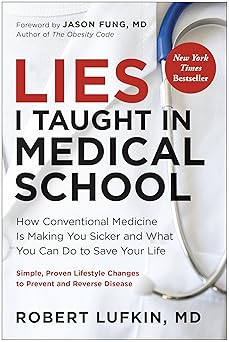
The title “Lies I Taught in Medical School” might suggest a tongue-in-cheek reflection on how some medical teachings—either inadvertently or due to simplifications—turn out to be inaccurate or misleading. In medical education, as in any complex field, some facts or concepts may be misunderstood, oversimplified, or later corrected as knowledge evolves. Here are some examples of “lies” or misconceptions that might come up in medical training:
### 1. **”We Only Use 10% of Our Brain”**
– **Why it’s misleading**: This myth has been widely propagated, but it’s not true. Brain imaging studies have shown that nearly all parts of the brain have some known function, and much of the brain is active even when we’re at rest.
– **Why it was taught**: The idea likely stemmed from early neuroscientific studies that showed much of the brain was not actively engaged in basic motor functions, leading to the misconception that it was “unused.” However, different areas of the brain are responsible for a wide range of complex tasks.
### 2. **”The Human Body Is a Perfect Machine”**
– **Why it’s misleading**: While the human body is remarkable in its complexity, it’s certainly not a perfect system. The body is prone to flaws, inefficiencies, and aging. For instance, our immune system can misfire, and our bodies aren’t always great at preventing diseases like cancer.
– **Why it was taught**: The body is often taught in an idealized way, especially to medical students, to highlight the impressive nature of human physiology, but it’s important to acknowledge the system’s limitations, especially as we learn more about disease and aging.
### 3. **”The Heart Works Like a Pump”**
– **Why it’s misleading**: While it’s true that the heart pumps blood, describing it simply as a pump is an oversimplification. The heart’s function is influenced by complex factors like myocardial elasticity, vascular resistance, and the synchronization of electrical impulses.
– **Why it was taught**: The “pump” metaphor is useful for initial students to understand the basic concept of the heart’s function. However, as one progresses in cardiology, the intricacies become clearer.
### 4. **”Antibiotics Will Cure Any Infection”**
– **Why it’s misleading**: Antibiotics are effective against bacterial infections but not against viral infections (like the common cold or flu). Overuse of antibiotics can also lead to antibiotic resistance.
– **Why it was taught**: Early in medical education, the focus on bacterial pathogens might have led to the oversimplified view that antibiotics are a cure-all. With more recent medical advancements, there’s greater awareness of the limits and dangers of antibiotic overuse.
### 5. **”You Can Diagnose a Condition Just by Listening to the Patient”**
– **Why it’s misleading**: While a thorough history-taking is essential in diagnosing, it is rarely the case that a diagnosis can be made without physical examination, lab tests, or imaging studies. Conditions like cancer, diabetes, or heart disease often require more than just a patient’s story.
– **Why it was taught**: This may be an exaggeration meant to emphasize the importance of the physician-patient relationship and the value of a good history in medicine. But it does not adequately convey the importance of additional diagnostic tools and tests.
### 6. **”If You Have a Fever, It’s Probably an Infection”**
– **Why it’s misleading**: Fever is often caused by infections, but it can also be the result of inflammatory conditions, autoimmune diseases, cancer, or even medications. Not all fevers are infectious in origin.
– **Why it was taught**: Fever was traditionally viewed as a key sign of infection, and this simplified understanding served as a starting point for medical students. Over time, students learn about the broad range of causes of fever.
### 7. **”Breathing Through Your Mouth Is Bad for You”**
– **Why it’s misleading**: While it’s generally healthier to breathe through your nose (due to filtration and humidification of the air), mouth breathing is not necessarily harmful, especially in cases of nasal obstruction or during intense physical exertion.
– **Why it was taught**: The idea that mouth breathing is bad likely arose from the fact that the nose plays a key role in warming, filtering, and humidifying air. However, in practice, the body adapts, and mouth breathing can be an important compensatory mechanism.
### 8. **”You Should Drink 8 Glasses of Water a Day”**
– **Why it’s misleading**: The “8 glasses a day” rule is an oversimplification. Hydration needs vary based on factors like activity level, climate, and individual physiology. Many foods contribute to your daily fluid intake as well.
– **Why it was taught**: This rule of thumb was likely adopted for simplicity’s sake, but recent evidence emphasizes that hydration needs are more nuanced and should be personalized.
### 9. **”A Stroke Always Results in Paralysis”**
– **Why it’s misleading**: Strokes can cause a wide range of symptoms, and paralysis is not always one of them. Depending on the area of the brain affected, stroke symptoms may include speech difficulties, vision changes, cognitive impairments, or even no noticeable deficits at all.
– **Why it was taught**: Early stroke education might have been framed around the most dramatic effects of a stroke (paralysis), which is why it was often emphasized in the curriculum. As understanding of stroke types has expanded, it is now known that symptoms can vary significantly.
### 10. **”The Germ Theory of Disease Was Immediately Accepted by All Doctors”**
– **Why it’s misleading**: Although we now take the germ theory for granted, it was initially met with resistance. Many physicians rejected the idea that microscopic organisms could cause disease.
– **Why it was taught**: The emphasis in medical training is often placed on scientific discoveries as if they were universally embraced, but in reality, it took decades for the germ theory to be widely accepted.
—
### Conclusion:
Medical education is a constantly evolving field, and it’s important to recognize that some “truths” taught in medical school are often simplifications or outdated concepts. While they may serve as useful starting points, it’s crucial for medical professionals to continue questioning, refining, and learning as they advance in their careers. Being aware of the historical “lies” or misconceptions helps in developing a more nuanced understanding of human health and disease.
Only logged in customers who have purchased this product may leave a review.
Related products
Medical Books
Medical Books
Medical Books
Medical Books
Medical Books
Medical Books
Medical Books
Reviews
There are no reviews yet.