Description
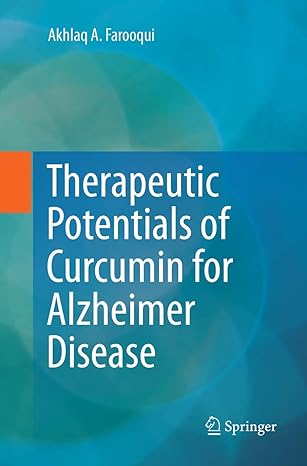
Curcumin is a yellow-orange pigment obtained from the plant Curcuma longa. The powdered rhizome of this plant, called turmeric, is a common ingredient in curry powders and has a long history of use in traditional Asian medicine. Thus, curcumin has been used extensively in Ayurvedic medicine (Indian system of medicine) and Chinese traditional medicine for centuries as a antinociceptive, antiinflammatory, and antishock agent to relieve pain and inflammation. Epidemiological studies have revealed that in India, where dietary curcumin is consumed daily in the form of curry than in the United States, the morbidity rate attributed to Alzheimer disease (AD) for Indian elders (70-79 years old) is 4.4 times lower compared to the same age group of Americans. Furthermore, elderly healthy individuals who consume curry more frequently show better cognitive performance than senior who do not consume curry. Curcumin has been extensively investigated for treating AD over decades in animal model of AD, where curcumin crosses blood brain barrier and neural cell membranes and mediates its antioxidant, antiinflammatory, antiamyloidogenic, antiangiogenic, antiproliferative, antiapoptotic, metal chelating effects leading to retardation of signal transduction pathways associated with oxidative stress and neuroinflammation. Thus, curcumin fulfills the characteristics for an ideal neuroprotective agent for AD with its low toxicity, affordability, and easy accessibility. However, poor bioavailability of curcumin is the major hurdle for its more widespread use in animals and humans. The bioavailability of curcumin can be increased by encapsulation of curcumin into liposomes, cyclodextrin, curcumin conjugate with PLGA, complexation with phospholipids, and synthesis of curcumin analogs. This monograph is the first to describe neurochemical potentials of curcumin for the treatment of AD.
This monograph presents readers with cutting edge and comprehensive information on the effect of curcumin on visceral organs and brain. It is hoped that this monograph will be useful to postgraduate students, faculty, research scientists, nutritionists, and physicians, who are curious signal transduction processes associated with antioxidant, antiinflammatory, antiamyloidogenic, antiangiogenic, antiproliferative, and antiapoptotic effects of curcumin on the brain.



Reviews
There are no reviews yet.